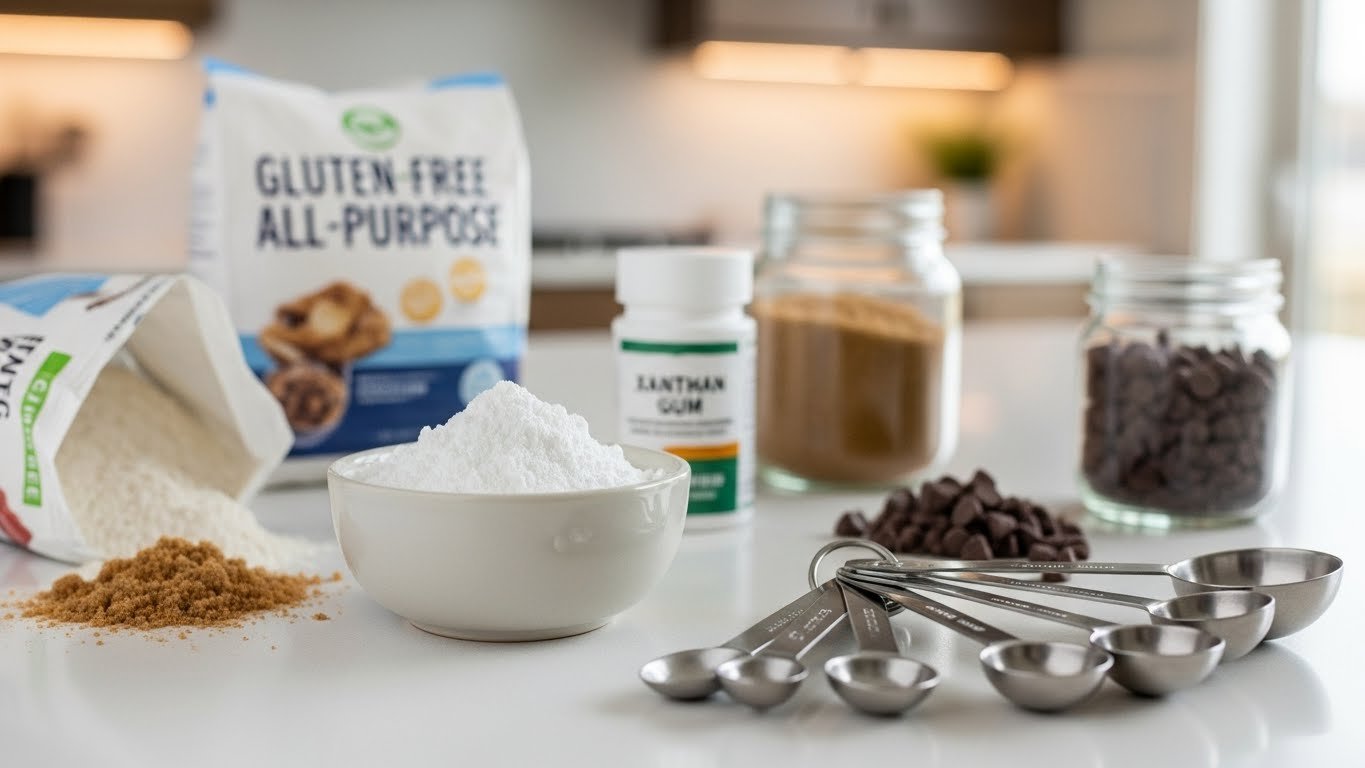
If you bake gluten free, you’ve probably asked this question at least once — maybe while standing in your kitchen mid-recipe, staring at a can of baking powder and wondering if it’s actually safe.
Is baking powder gluten free?
The short answer is usually yes.
The longer answer is the one that really matters — because not all baking powders are created equal, and for people with celiac disease or gluten sensitivity, the details make a difference.
In this guide, we’ll walk through everything you need to know about baking powder and gluten. We’ll keep it practical, clear, and easy to follow, so you can bake with confidence instead of second-guessing every ingredient.
You’ll learn:
- What baking powder is made of
- Why most baking powder is gluten free
- When it might not be safe
- How to read labels correctly
- Baking powder vs baking soda
- Safe options for gluten-free baking
Let’s break it down.
What Is Baking Powder, Exactly?
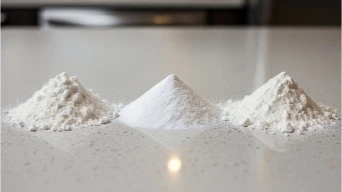
Baking powder is a leavening agent. Its job is to help baked goods rise and become light instead of dense.
Most baking powder contains three main components:
- An acid (like cream of tartar or sodium aluminum sulfate)
- A base (usually baking soda)
- A starch (to keep everything dry and stable)
When baking powder gets wet and heated, it creates carbon dioxide bubbles. Those bubbles are what make cakes fluffy, muffins tall, and pancakes light.
None of those ingredients are gluten by nature — which is good news.
Is Baking Powder Naturally Gluten Free?
Yes, baking powder is naturally gluten free.
The core ingredients do not come from wheat, barley, or rye. That means plain baking powder does not contain gluten on its own.
So why does this question keep coming up?
Because of the starch.
The Starch Question: Where Gluten Can Sneak In
The starch in baking powder is there to absorb moisture and prevent clumping. Most modern baking powders use:
- Cornstarch
- Potato starch
- Tapioca starch
All of those are gluten free.
However, older formulations and some imported products have used wheat starch in the past. While this is far less common today, it’s still the main reason label-checking matters.
If you want a deeper understanding of gluten-free starches and how they behave in baking, this guide is a helpful companion.
Is Baking Powder Safe for Celiac Disease?
For most people with celiac disease, commercial baking powder labeled gluten free is safe.
However, there are two things to watch for:
1. Wheat-Based Starch
Always check the ingredient list. If you see “wheat starch,” avoid it unless the product is clearly labeled gluten free and processed to remove gluten (which is rare for baking powder).
2. Cross-Contamination
Some baking powders are produced in facilities that also process wheat products. This doesn’t automatically make them unsafe, but it does matter for people who are highly sensitive.
For medical guidance on strict gluten avoidance, this overview is useful.
How to Tell If Baking Powder Is Gluten Free
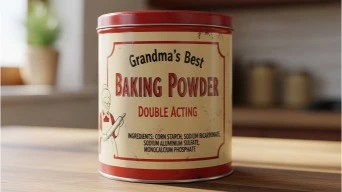
This is where label reading becomes your best tool.
What to Look For
- “Gluten Free” clearly stated on the label
- Simple ingredient lists
- Familiar starches like cornstarch or potato starch
What to Be Cautious About
- No allergen information listed
- Imported products without clear labeling
- Generic or bulk baking powder without packaging
When in doubt, stick with brands that clearly label their products as gluten free.
Common Gluten-Free Baking Powder Brands
Most mainstream baking powder brands sold in the U.S. are gluten free, but always verify labels since formulas can change.
Well-known gluten-free options are often confirmed by:
- Clear labeling
- Manufacturer statements
- Third-party testing
For up-to-date ingredient verification, manufacturer FAQs or product pages are the most reliable source.
Baking Powder vs Baking Soda: Are Both Gluten Free?
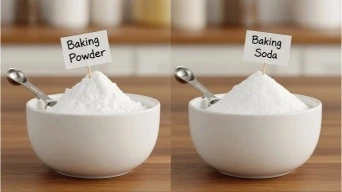
This question comes up a lot — and the answer is reassuring.
Baking Soda
- Made from sodium bicarbonate
- Naturally gluten free
- No starch added
Baking Powder
- Contains baking soda + acid + starch
- Usually gluten free
- Requires label checking
Both are safe for gluten-free baking when sourced correctly.
If you’ve ever wondered why recipes use one or the other, it comes down to acidity and timing — not gluten content.
Can Baking Powder Go Bad (And Does That Matter)?
Baking powder doesn’t spoil in the traditional sense, but it loses strength over time.
Expired baking powder won’t make food unsafe, but it can:
- Reduce rise
- Cause dense baked goods
- Affect texture
Quick Freshness Test
Mix ½ teaspoon baking powder with hot water.
If it bubbles vigorously, it’s still active.
Using fresh baking powder matters even more in gluten-free baking, where structure is already delicate.
Does Baking Powder Affect Gluten-Free Texture?
Absolutely.
In gluten-free baking, baking powder plays a bigger role than it does in traditional recipes. Without gluten’s elasticity, baked goods rely heavily on leavening for lift and softness.
Too little baking powder can cause:
- Dense cakes
- Flat muffins
- Heavy pancakes
Too much can cause:
- Bitter taste
- Collapse after baking
Balance matters.
If you bake often, pairing the right leavening with the right flour blend is key. This guide helps explain why.
Is Aluminum-Free Baking Powder Gluten Free?
Yes, aluminum-free baking powder can be gluten free — but aluminum content and gluten content are separate issues.
Aluminum-free baking powder:
- Uses different acids
- Has no impact on gluten safety
If you prefer aluminum-free options for taste reasons, just apply the same label-checking rules.
Can You Make Gluten-Free Baking Powder at Home?
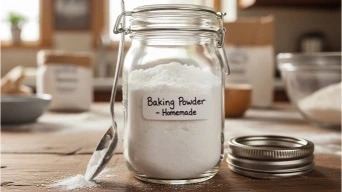
Yes — and it’s surprisingly simple.
DIY Gluten-Free Baking Powder
- 2 parts cream of tartar
- 1 part baking soda
- 1 part cornstarch (gluten free)
Mix and store in an airtight container.
This is useful if:
- You want full control over ingredients
- You’re baking for someone extremely sensitive
- You run out mid-recipe
Is Baking Powder Gluten Free in Restaurants and Bakeries?
This is harder to guarantee.
In restaurants:
- Baking powder may be gluten free
- Cross-contamination is more likely
In bakeries:
- Shared equipment and surfaces are common
If gluten safety is critical, it’s best to:
- Ask directly
- Choose dedicated gluten-free bakeries
- Bake at home when possible
Gluten-Free Recipes That Rely on Baking Powder
Baking powder shows up in many gluten-free staples, including:
- Cakes
- Muffins
- Pancakes
- Biscuits
- Dumplings
If you’re exploring gluten-free doughs and batters, these recipes pair well:
Short FAQ: Baking Powder & Gluten
Is baking powder gluten free?
Most baking powder is gluten free, but labels should always be checked.
Does baking powder contain wheat?
Usually no, but some products may use wheat starch.
Is baking soda gluten free?
Yes, baking soda is naturally gluten free.
Is baking powder safe for celiac disease?
Yes, when it’s labeled gluten free and produced safely.
Can I substitute baking soda for baking powder?
Not directly. They behave differently and need recipe adjustments.
The Takeaway:
For the vast majority of people, baking powder is safe on a gluten-free diet. It’s naturally gluten free, widely available in gluten-free versions, and essential for successful baking.
The key is awareness, not fear.
Read labels.
Choose trusted brands.
Store it properly.
Use it fresh.
When you do, baking powder becomes what it should be — a simple, reliable ingredient that helps your gluten-free baking turn out light, fluffy, and enjoyable every time.