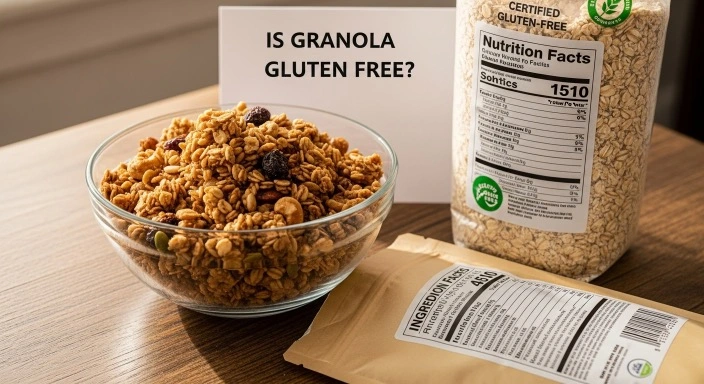
Is granola gluten free
Granola sits in a strange place in the gluten free world. It looks safe. It’s often marketed as healthy. And it usually contains ingredients that seem harmless at first glance.
And yet, granola is one of the most common sources of accidental gluten exposure for gluten free eaters.
The question “Is granola gluten free?” doesn’t have a simple yes-or-no answer. The real answer depends on oats, processing, labeling, and cross-contact — and understanding those details is what keeps granola from becoming a problem food.
This article breaks it down clearly, without fear-mongering or confusion.
Is Granola Gluten Free by Default?
No. Granola is not automatically gluten free.
Even though oats are naturally gluten free, most conventional oats are:
- Grown near wheat
- Harvested with shared equipment
- Processed in facilities that handle gluten grains
That’s where cross-contact happens.
The Role of Oats in Granola
Oats are the main ingredient in most granola. The problem isn’t oats themselves — it’s how they’re handled.
Certified Gluten Free Oats
These oats are:
- Grown in dedicated fields
- Processed in gluten-free facilities
- Tested to meet strict gluten thresholds
Regular Oats
Often contain traces of:
- Wheat
- Barley
- Rye
This distinction matters deeply for people with celiac disease.
For medical guidance, see: What is Gluten https://www.celiac.org/gluten-free-living/what-is-gluten/
What About Wheat, Barley, or Rye in Granola?
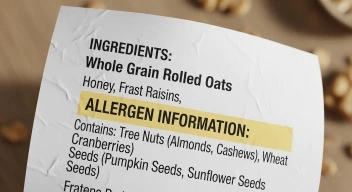
Some granola contains:
- Wheat flakes
- Malt extract or malt syrup (from barley)
- Barley flakes
Any of these ingredients make granola not gluten free.
Always scan ingredient lists carefully.
Cross-Contact: The Hidden Risk
Even granola without obvious gluten ingredients can be unsafe if:
- Made in shared facilities
- Packaged with gluten products
- Lacks gluten-free certification
This is why labeling matters more than assumptions.
Healthline explains this clearly.
Is Granola Safe for Celiac Disease?
It can be — but only when it’s made with certified gluten free oats and processed safely.
People with non-celiac gluten sensitivity may tolerate uncertified oats, but celiac guidelines are stricter.
Homemade vs Store-Bought Granola
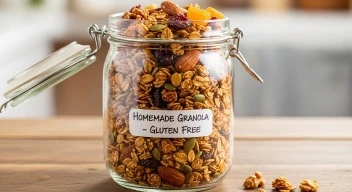
This is where homemade granola shines.
When you make your own:
- You control the oats
- You avoid hidden gluten
- You reduce cross-contact risk
If you want a safe starting point, this recipe walks you through it:
How to Make Gluten Free Granola
Short FAQ: Is Granola Gluten Free?
Is granola gluten free if it contains oats?
Only if the oats are certified gluten free.
Is oat granola safe for celiac disease?
Yes, when certified gluten free.
Can granola contain hidden gluten?
Yes, through cross-contact or malt ingredients.
Is homemade granola safer?
Often, yes — if made with safe oats.
The Takeaway
Granola isn’t a food to fear, but it is a food to understand.
The difference between safe and unsafe granola comes down to:
- Oat sourcing
- Ingredient transparency
- Processing practices
Once you know what to look for, granola becomes one of the most versatile, enjoyable gluten free foods — especially when you make it yourself.And if you want full control from start to finish, the best place to begin is here: How to Make Gluten Free Granola.